

Once we’d settled into life on Koh Samui, the question came: how do I actually make a living from here? A deep-tech startup wasn’t realistic from an island. I needed something I could build entirely remotely. So I built (another) SaaS.
The idea: take the new AI models that could generate realistic images and video, and build a tool for online influencers. Instead of flying to exotic locations and shooting with a camera, they could make the same content from home, for a fraction of the cost.
It started with needing someone to believe me.
I have a technical co-founder with twenty years’ experience, but the business had to start with me. I had to show enough proof in the idea for him to write the first line of code.
So I went to influencers. Describing the tool in words didn’t work - so I started sending them AI images of themselves in places they’d never been: skydiving, diving with sharks, floating in space. That opened the conversation.
Within two weeks we had a few paying customers - creators paying me to make the AI images by hand. That was the proof my partner needed. He built the product.
We moved those first users onto the real app. We hit $1,000 a month.
And there we stalled.
The AI looked impressive, but influencers kept coming back with the same note: “It’s not 100% me.” Small deviations - the limits of the tech. An outsider wouldn’t notice. But someone looking at their own face does. For an influencer, that’s everything. We were stuck there for months.
Borrowing an audience to grow.
To learn the market, I joined Telegram groups about AI content monetization. One day I saw a creator who taught thousands of people how to earn income with virtual AI influencers. He was recommending a competitor app of ours as an affiliate, for a small commission per referral.
I came back with a different offer: forget the referral fee - come in as an equal partner, a co-owner of the SaaS.
We didn’t know each other, so we started with a two-month trial. We’d see if he could really bring paying customers; he’d see if we could build something people pay for.
Two weeks in, he dropped our app’s link to his community.
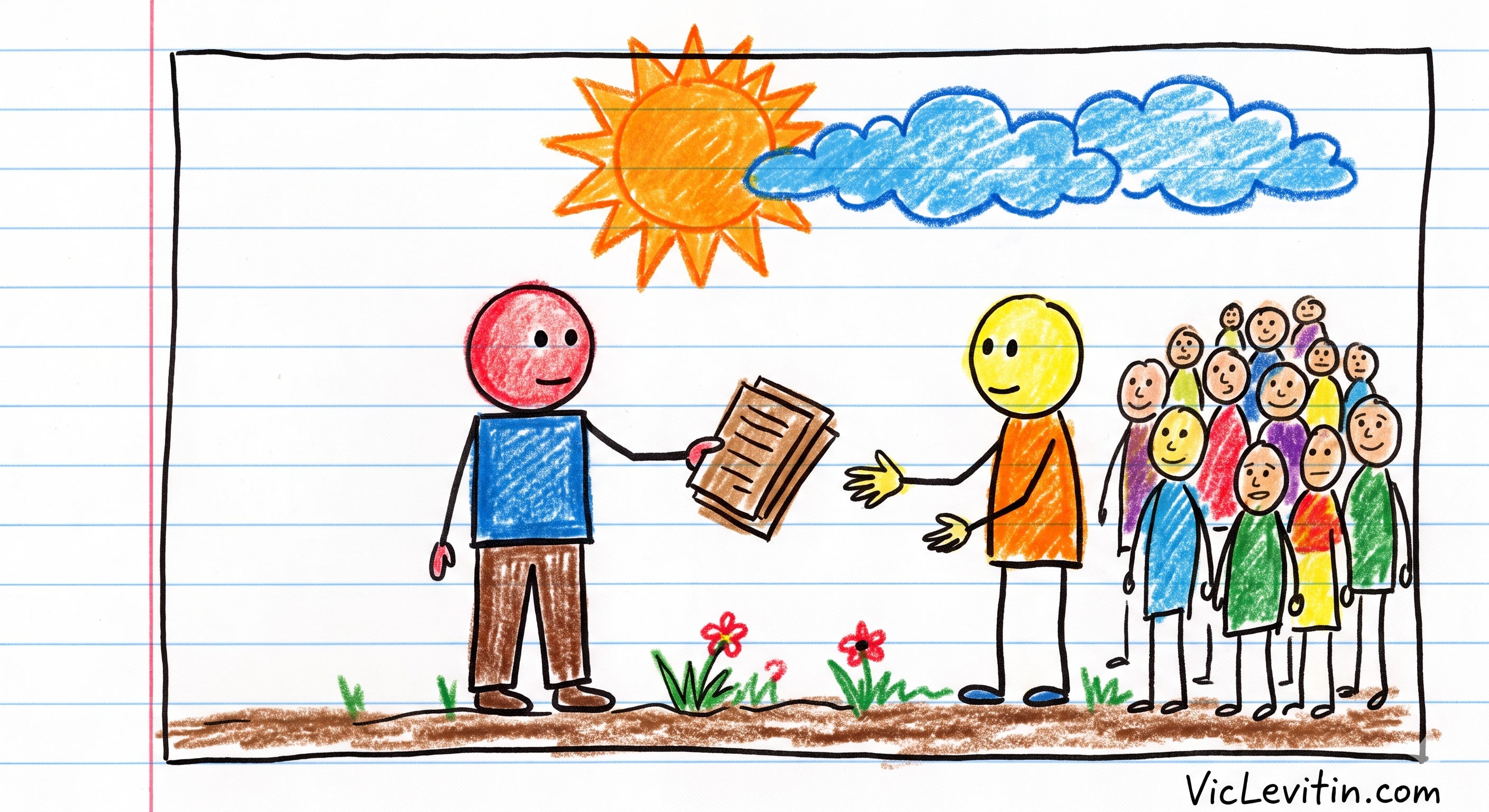
Within days, he’d brought in nearly 200 paying customers. I remember watching the payment notifications stack up on my phone, one after another, and understanding that something had just changed.
His audience was the missing piece. We registered a company, the three of us as equal partners.
We also figured out why it suddenly worked: his niche was AI influencers - fully invented personas, built from scratch. Nobody was looking at their own face, so the small inaccuracies didn’t matter. The thing we’d been stuck on for months simply stopped being a problem.
We’d traded a third of the company for an audience that already trusted him. It took us to $30,000 a month.
The climb to $90K.
His community wasn’t just revenue - it was data. We learned which features people actually used, which messages pulled the right buyers. That first audience was the seed; everything after grew from what it taught us.
So we pushed. A referral program - paying our own users to bring in people who trusted them. Paid videos with YouTube creators in the AI space. Same play every time: renting trust from people who’d spent years earning it.
It was fast and a little unhinged. We went from a few thousand image generations a week to millions, server bills climbing, shipping features weekly just to keep up. Less than a year in, we crossed $90,000 a month.
A rocket built almost entirely on borrowed trust.
The part I didn’t see coming.
Then we hit a different kind of dependency: the payment processors.
The first one shut us down one day, no warning. Every subscription, all the revenue, gone overnight. The reason was boilerplate - “doesn’t meet our policy.” What I learned later: realistic AI-generated content scares the whole payment world. The card networks above the processors are afraid of the brand risk of enabling tools that could make harmful content.
A processor moving billions a year has no reason to spend a person’s time vetting a business our size. Cutting us was simply the safe move.
I found a younger, hungrier processor. Did a video call with their CEO, went deep on the business - it felt personal this time, two founders building something together.
Within two months, they cut us too.
Then came an established processor, twenty years in the business. We spent weeks with their compliance team building a system that would pass any check. It worked. The business grew on what finally felt like solid ground.
We only survived all that switching because our users trusted the company enough to re-subscribe every time we changed payment rails.
The collapse.
Half a year later, I got ‘the call’ directly from our third processor’s CEO. Because of our relationship, he called personally to tell me before the automation took over. He was frustrated - he wasn’t cutting us because he wanted to. He was being forced to by the card networks above him. They put it in writing:
We’ve invested significant resources to keep this category compliant. Despite this, fines continue to be issued aggressively by the card networks, often without clear explanation. This has become unsustainable. We’ve made the decision to discontinue support for products involving AI-generated images, videos, and songs, and to suspend such accounts effective immediately.
He said he was willing to fight it, to appeal. I took a day, then called back and told him not to waste his energy.
We could have gone hunting for a fourth processor, and a fifth. But after three of them hit the exact same wall, I stopped blaming the processors. They weren’t the ones making the call. The card networks had decided that businesses like ours - small, in a category they saw as high-risk - weren’t worth the trouble. The big, established players in the space had the size and the relationships to weather it. We didn’t.
$90,000 a month, and within a day, the ground was gone.
What it taught me.
Here’s the thing, though: the growth engine never broke. The way we got to $90K worked exactly as I’d hoped. What broke was the payment plumbing underneath it -
a completely separate problem from how we grew.
And that’s the part I’m keeping.
My last SAAS company, CrazyLister, took three years to pass $90K a month. I built it the slow way - earning my own audience over years. This one took less than a year, because I didn’t build the audience. I borrowed it. I found people who’d already spent years earning a crowd’s trust, and I plugged into what they’d built.
That’s the real lesson, and it’s not a cautionary one: you can skip the slowest, hardest part of building a business by renting trust someone else already earned. Years of audience-building, compressed into months. It’s the biggest shortcut I’ve found, and I’m taking it into the next one.
So now we start by partnering with people who already have a trusted audience - and build from there.